
Regular Budget vs. Survival Budget: 2 Systems Every Adult Should Have
Apr 29, 2026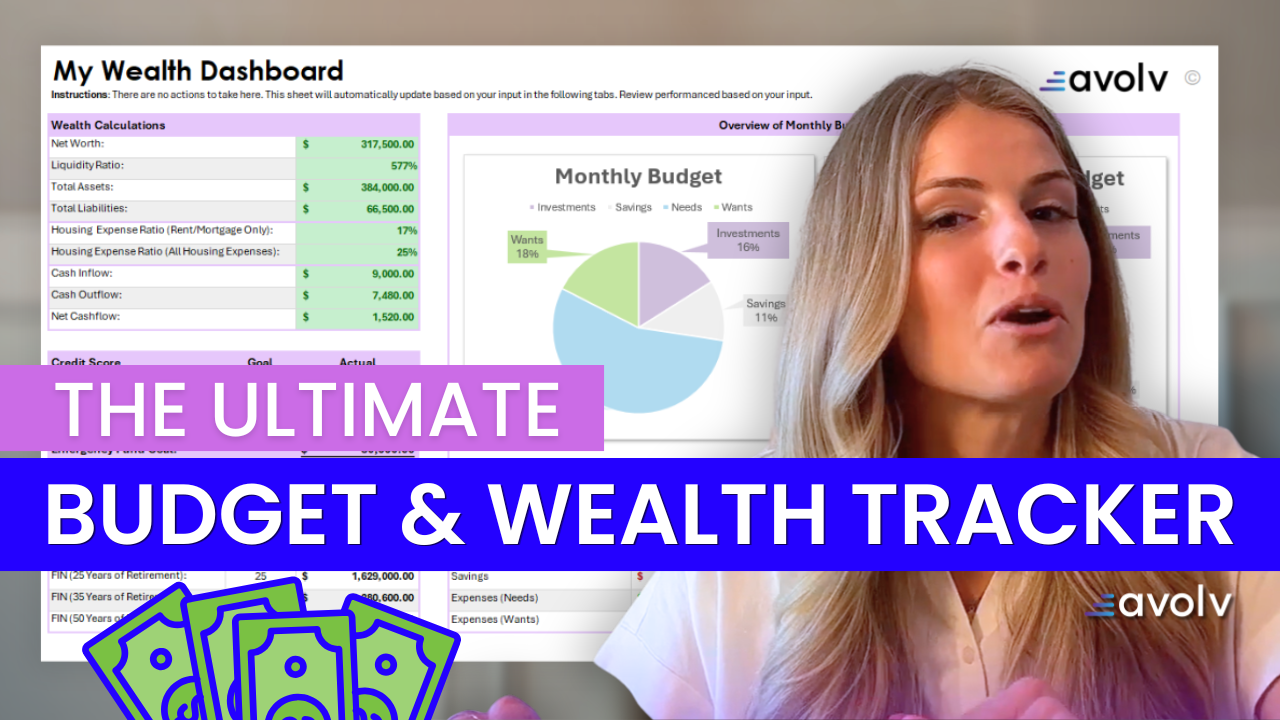
Regular Budget vs. Survival Budget: The Two Systems Every Adult Should Have
Most adults only build one budget for when things are going right. What about when "life happens?"
A regular budget tells you how to thrive when life is going well — paychecks rolling in, side hustle humming, investments growing. But it tells you nothing about what happens when the floor drops out. A layoff, a medical bill, a market dip, a relationship change — the world doesn't ask permission before testing your numbers.
That's where the second "survival" budget comes in.
A Regular Budget = Your Ideal Performance Plan
Your regular budget is built around your real income — every paycheck, side hustle dollar, and bit of interest. Inside the Avolv Budget & Wealth Calculator, the Budget tab is structured around five buckets: Income, Investments, Savings, Needs, and Wants — with a target allocation that looks something like 20% investing, 10% saving, 50% needs, 20% wants.
In our example file, that translates to $7,480/month in income, with $1,200 going to investments (401K, Roth, IRA, HSA), $850 to savings, $4,125 to needs (rent, groceries, utilities, insurance), and $1,305 to wants. That's a thriving plan — every dollar has a job, and the long-term math is working for you.
This is the budget that builds wealth. But it assumes the income keeps showing up.
A Survival Budget = Your "Floor" Plan
Now flip the script. Same five buckets — but assume the paychecks are zero. No work income. No side hustle. No bank interest. Just you, your fixed costs, and your emergency fund.
That's the Survival Budget tab. Same structure, totally different math.
In the example, paycheck income drops to $0 and a $3,200 monthly distribution from the emergency fund becomes the new "income line." Investments shrink from $1,200/mo to $250 (Roth only — accessible, not locked). Savings goes to $0 (you can't save what you don't have). Wants get cut from $1,305 to $120. And needs? They flex — groceries actually go up (you're cooking everything from scratch instead of grabbing lunch out), but life insurance, donations, and tax payments all drop or disappear because the income that triggered them is gone.
The result: a $2,930 monthly survival number — almost half the regular budget. That single figure is the most empowering number in the whole sheet.
Why You Need Both
Once you know your survival number, you can answer the question every adult quietly worries about: "How long could I last if everything went sideways?"
Take your emergency fund. Divide it by your survival number. That's your runway in months. If the answer is 6, you sleep well. If it's 0.5, you have a clear next move.
A regular budget tells you how to grow. A survival budget tells you you're safe. You don't get to feel financially confident with only one of them.
Build Both in Under an Hour
▶️ Watch the full template walkthrough: https://youtu.be/GJTS5NV8TzA
🌐 Get the Budget & Wealth Calculator — both tabs are pre-built with an automatic dashboard to compare your results. Drop in your numbers and you'll have your runway calculated by the time you finish your coffee.
📬 One playbook a week, free — Subscribe to the Avolv newsletter for the tools, templates, and shortcuts school never taught you.
Own your story. In every season.
🔔 Subscribe to our Avolv YouTube for free weekly life skill playbooks to level up your life systems that make adulting easier.
Stay connected with news and updates!
Join our mailing list to receive the latest news and updates from our team.
Don't worry, your information will not be shared.
We hate SPAM. We will never sell your information, for any reason.